

For millions of young adults, online surveys get written off as a waste of time. That reputation isn't entirely fair. While they won't replace your day job, surveys are one of the most accessible ways to earn real, flexible side cash with nothing but a phone and a few spare minutes. No skills, no experience, no boss. The mobile survey demographics skew heavily toward 18-35 year olds precisely because this group lives on their phones and values income that fits around their schedule, not the other way around. This article breaks down exactly how surveys work, what you can realistically earn, and how to squeeze the most value out of every minute you spend answering questions.
Table of Contents
- How online surveys work and who they're for
- What you can really earn: Expectations vs. reality
- Cashing out: Payment methods and fast reward options
- Pros, cons, and what most forget about survey side gigs
- Our perspective: Why surveys still matter in 2026's gig economy
- Start earning from online surveys with PrizePeek
- Frequently asked questions
Key Takeaways
| Point | Details |
|---|---|
| Flexible side income | Online surveys offer quick, no-skill cash for 18-35 year olds looking to boost their income. |
| Modest but reliable pay | Typical users earn $30-$50 monthly, with payouts often hitting digital wallets in days. |
| Screening is normal | Frequent survey disqualifications are part of matching you with the right studies. |
| Not a get-rich-quick fix | Online surveys are best for spare time and pocket money, not as a main income stream. |
How online surveys work and who they're for
Online surveys exist because companies need real opinions from real people. Before a brand launches a product, tweaks a service, or runs an ad campaign, they want to know what their target customers think. That's where you come in. Survey platforms act as the middleman, connecting market researchers with everyday people willing to share their views for a small reward.
Here's how the process typically works:
- Create a profile: You fill out demographic details like age, location, income, and interests. This profile determines which surveys you get matched to.
- Get invited: The platform matches you to surveys based on your profile and sends invitations via email or app notification.
- Answer screening questions: Almost every survey starts with a short set of screening questions to confirm you fit the target group. If you don't qualify, you get booted. This is normal.
- Complete the survey: If you pass screening, you answer the full set of questions, which usually takes 5 to 20 minutes.
- Earn your reward: Points or cash are added to your account. Accumulate enough and you can redeem for cash or gift cards.
The experience is genuinely simple. You don't need a resume, a portfolio, or any specialized knowledge. That's exactly why surveys attract such a wide audience, especially people who want earning money online to feel effortless rather than like a second job.
Who gets the most out of surveys? People with irregular schedules, students between classes, commuters, or anyone with short pockets of downtime throughout the day. Surveys are built for mobile, so you can knock one out while waiting in line or watching TV.
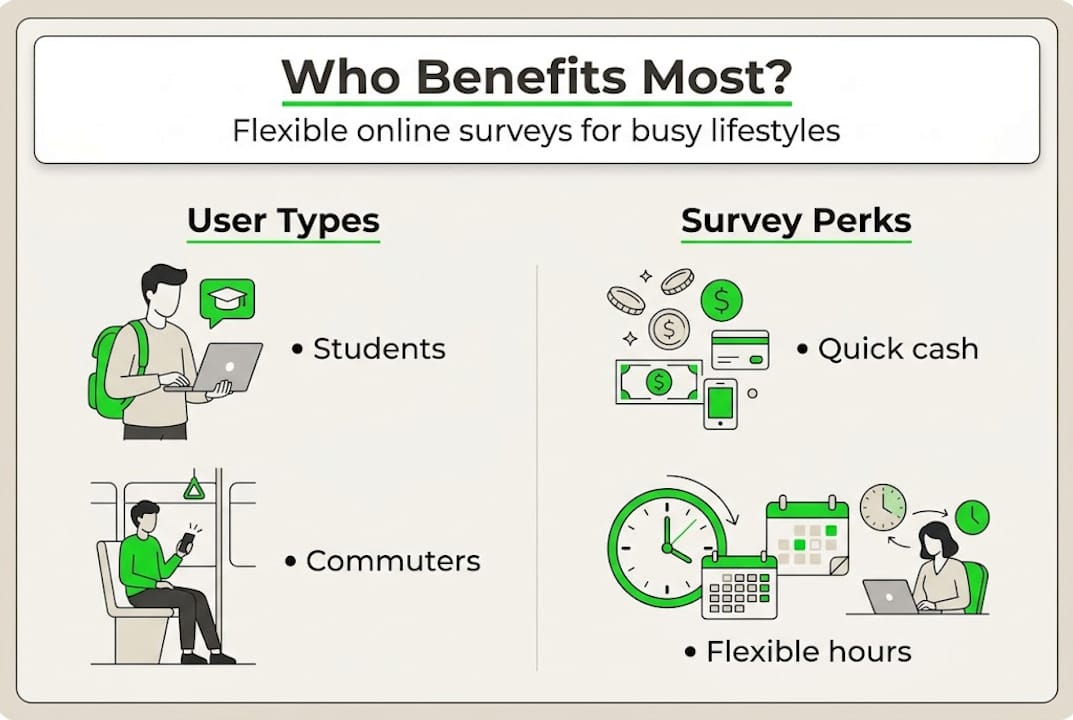
| User type | Best fit for surveys? | Why |
|---|---|---|
| Students | Yes | Flexible schedule, mobile-first |
| Full-time workers | Moderate | Limited time, but possible on breaks |
| Freelancers | Yes | Variable downtime, easy to fill gaps |
| Stay-at-home parents | Yes | Short tasks fit around daily routines |
Pro Tip: Keep your profile fully updated at all times. Platforms match you to surveys based on your demographic data. An outdated or incomplete profile means fewer invitations and more disqualifications.
Disqualifications are the most frustrating part of the survey experience. You might answer five screening questions only to get told you don't qualify. It's not personal. Researchers have very specific audience targets, and once those slots are filled, everyone else gets cut. Expect it, plan for it, and don't let it slow you down.
What you can really earn: Expectations vs. reality
Let's be direct: online surveys are not a path to financial freedom. But they're also not worthless. The key is knowing what to expect before you start.
Most surveys pay between $0.50 and $3 for a 5 to 20 minute task. That translates to roughly $2 to $6 per hour when you factor in screening time and occasional disqualifications. Not minimum wage territory, but not nothing either.

Here's a realistic breakdown of monthly earnings by user type:
| User type | Time invested per week | Estimated monthly earnings |
|---|---|---|
| Casual user | 1-2 hours | $10-$20 |
| Regular user | 3-5 hours | $30-$50 |
| Power user | 8-10 hours | $80-$130 |
Reality check: Most consistent survey takers land in the $30 to $50 per month range. That's not life-changing, but it covers a streaming subscription, a few meals out, or a chunk of a phone bill.
The earnings from surveys picture gets murkier when you account for the downsides. Disqualifications eat into your effective hourly rate. Some surveys advertise a $3 payout but take 25 minutes to complete. And certain platforms have high cashout minimums that make it feel like your balance never moves.
Common frustrations to watch for:
- Disqualifications mid-survey: Some platforms disqualify you after 10 minutes of answering, wasting your time entirely.
- Low hourly rate: Even on a good day, you're unlikely to break $6 per hour.
- Inconsistent availability: Survey volume fluctuates. Some weeks are busy, others are dry.
- Privacy trade-offs: You share personal data to get matched. Read each platform's privacy policy before signing up.
The honest framing: surveys work best as a supplement, not a strategy. Use them to turn dead time into a few extra dollars each month. Don't quit anything for them.
Cashing out: Payment methods and fast reward options
One of the biggest selling points of online surveys is how quickly you can access your earnings. Unlike some side gigs where you wait weeks for a check, many survey platforms offer PayPal and gift card surveys with payouts that hit within 1 to 3 days of requesting them.
Here are the most common payout options you'll encounter:
- PayPal: The most popular choice. Fast, reliable, and transfers directly to your bank. Minimum cashout thresholds typically range from $3 to $15.
- Digital gift cards: Amazon, Starbucks, Target, and similar retailers are common options. Often available at lower minimums than PayPal.
- Prepaid Visa or Mastercard: Less common but useful if you want the flexibility of cash without a PayPal account.
- Cryptocurrency: A small number of platforms now offer Bitcoin or Litecoin payouts, which appeals to users already active in crypto.
- Charity donations: Some platforms let you convert points to donations, which isn't cash but is worth knowing about.
Pro Tip: Always check the cashout minimum before joining a new survey site. A $25 minimum sounds reasonable until you realize you're only earning $3 a week. Prioritize platforms with minimums under $10.
Speed matters. Platforms that pay via PayPal or gift cards within 24 to 72 hours feel far more rewarding than those that process requests over 7 to 10 business days. That fast feedback loop keeps you motivated to keep going.
Digital gift cards are worth a second look. If you regularly shop at Amazon or grab coffee at Starbucks, cashing out in gift cards can feel like free money for things you'd buy anyway. Some users actually prefer this over PayPal for that reason.
The most reliable platforms are transparent about their payout timelines. If a site is vague about when you'll get paid or makes the redemption process unnecessarily complicated, that's a red flag worth taking seriously.
Pros, cons, and what most forget about survey side gigs
Online surveys have a complicated reputation, and honestly, both sides of the debate have a point. Here's the full picture.
The real pros:
- Zero skill required. Anyone can do it.
- Genuinely flexible. No set hours, no commitments.
- Mobile-friendly. Earn from anywhere.
- Fast payouts on good platforms.
- A low-risk way to start earning online with no upfront investment.
The real cons:
- Low hourly rate compared to almost any other side hustle.
- Frequent disqualifications are demoralizing if you're not prepared for them.
- Earnings are inconsistent month to month.
- Some platforms are slow to pay or have high cashout minimums.
According to side hustle trends, 61% of side hustlers say they rely on extra income just to afford basic expenses. For that group, surveys offer a genuinely useful, low-barrier option. But the same data makes clear that surveys occupy a niche role. They're not competing with freelancing, app testing, or gig work in terms of hourly return.
What most people forget: the best survey users treat it like a system, not a hobby. Here's how to do it right:
- Sign up for multiple platforms. More platforms means more survey invitations and less downtime waiting for new opportunities.
- Respond to invitations fast. Surveys fill up quickly. The first people to click often get in; everyone else gets screened out.
- Keep your profile current. Life changes. Update your employment status, household size, and interests regularly to stay matched to relevant surveys.
- Track your time. Know your actual hourly rate across all platforms. Drop the ones that aren't worth your time.
- Mix in higher-value tasks. App testing, focus groups, and user research studies often pay $10 to $50 per session for similar effort.
"Surveys are the entry-level side hustle. They're where you start, not where you stay."
The smartest approach is to use surveys as a baseline while layering in better-paying opportunities as you find them.
Our perspective: Why surveys still matter in 2026's gig economy
Here's our honest take after years of following side hustle trends: surveys aren't exciting, but they're underrated for a specific reason. They have the lowest barrier to entry of any legitimate online earning method. No application, no interview, no waiting period. You sign up, fill out a profile, and start earning the same day.
For a 22-year-old with a packed schedule and no time to build a freelance portfolio, that matters. A lot. The 61% of side hustlers who depend on extra income for affordability aren't all in a position to invest weeks learning a new skill. Surveys meet people where they are.
That said, the ceiling is real. If you're spending more than a few hours a week on surveys alone, you're leaving money on the table. The smarter play is to use surveys as a foundation and stack them with higher-paying tasks like app testing, which pays more per hour for a nearly identical effort level. Our online earning guide covers exactly how to build that kind of layered approach.
Surveys persist because they work for their intended purpose: turning spare minutes into spare cash. Just don't ask them to do more than that.
Start earning from online surveys with PrizePeek
If online surveys sound like a fit for your lifestyle, here's a platform that makes starting and cashing out simple. PrizePeek brings together curated survey opportunities alongside app testing tasks and partner offers, so you're never stuck waiting for a new survey to appear.
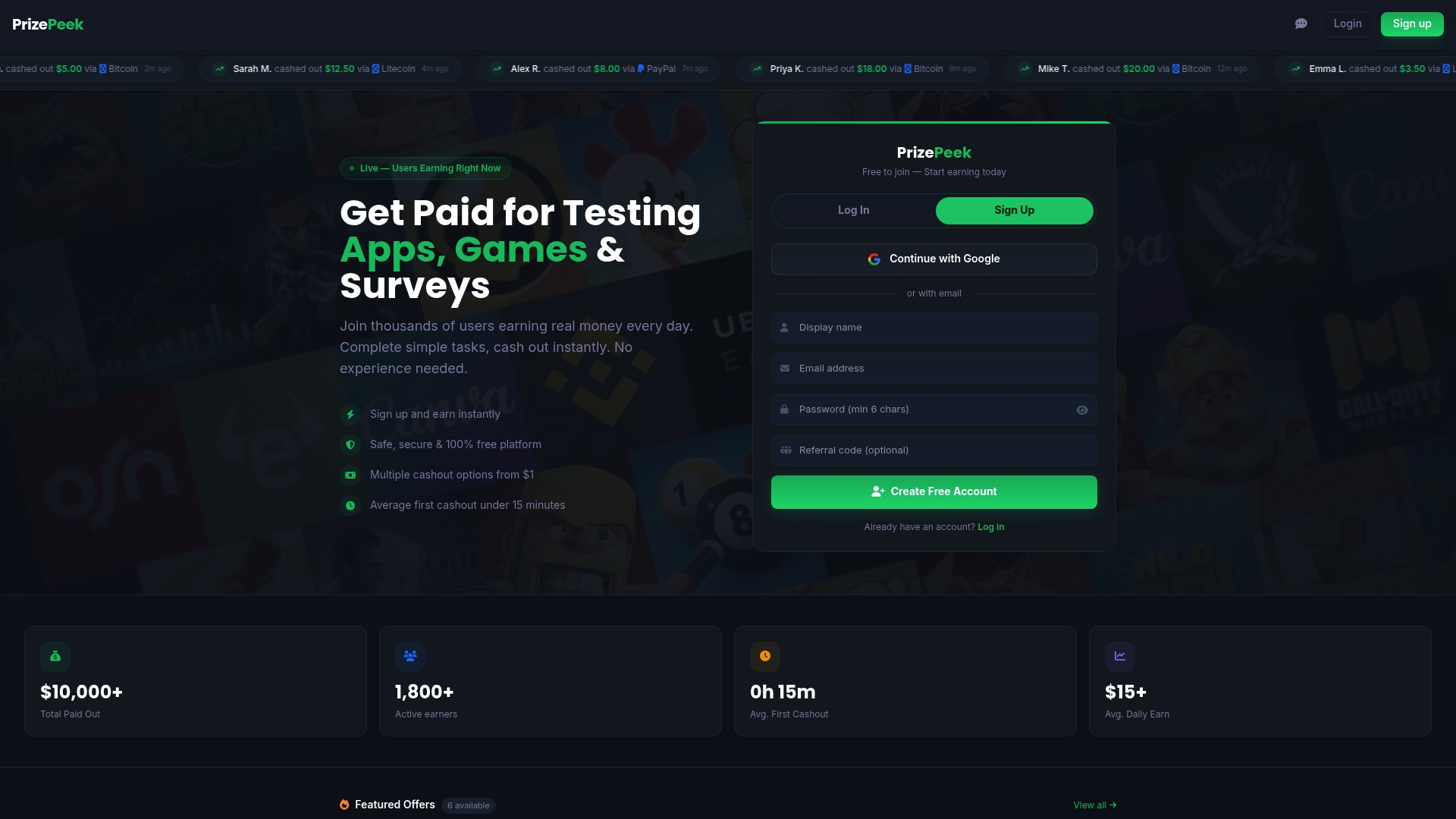
You can get started with PrizePeek in minutes and cash out via PayPal, Bitcoin, Litecoin, or popular digital gift cards once you hit a low minimum balance. The platform is built for people who want real rewards without the complexity. Whether you complete one survey a day or stack multiple tasks in a single session, PrizePeek keeps the process fast, transparent, and worth your time.
Frequently asked questions
How much can I earn per month from online surveys?
Most regular users earn $30 to $50 per month, while dedicated users who invest more time can reach up to $130 monthly depending on platform availability and consistency.
What is the fastest way to cash out survey earnings?
PayPal and digital gift cards are the fastest options, with many platforms processing payouts within 1-3 days after you request them, provided you've hit the minimum cashout threshold.
Why do surveys disqualify me so often?
Screening questions are used to match participants to a survey's specific target demographic. Once those slots are filled, disqualifications are common even if you answered everything honestly.
Are online surveys worth it compared to other side hustles?
For flexible, zero-skill side cash, surveys are a solid starting point, but earnings are modest compared to app testing or specialized research gigs, which often pay significantly more per hour according to side hustle data.