

Finding a reliable side income online feels like searching for a needle in a haystack. Most opportunities are either too competitive, too time-consuming, or just plain scammy. Website and app testing is different. Platforms like UserTesting, Userlytics, Trymata, and uTest pay real users to give usability feedback and find bugs, no special degree required. In this guide, you'll learn exactly what equipment you need, how the testing process works step by step, what earnings to realistically expect, and how to avoid the mistakes that hold most beginners back.
Table of Contents
- What you need to start testing websites for money
- Step-by-step: How website and app testing works
- Troubleshooting, common pitfalls, and maximizing your earnings
- What results to expect: benchmarks, real earnings, and success factors
- Real-world wisdom: What most guides miss about testing websites for money
- Next steps: Connect with top website testing platforms
- Frequently asked questions
Key Takeaways
| Point | Details |
|---|---|
| Start with the basics | Gather the right device and setup your profile on multiple testing platforms before applying for tasks. |
| Follow step-by-step instructions | Carefully complete each usability and bug test, providing clear feedback and screen recordings to qualify for payouts. |
| Maximize your earnings | Join 3-5 platforms, maintain high-quality feedback, and leverage multi-device access to scale your side income. |
| Expect variable payouts | Most testers earn $50-200 per month, with top performers reaching $300-500 depending on activity and demographics. |
| Avoid common mistakes | Use a quiet workspace, check device compatibility, and review your feedback for clarity to reduce rejections. |
What you need to start testing websites for money
Getting started is simpler than most people expect, but skipping the preparation stage is the fastest way to get rejected before you even begin. Let's cover the essentials.
Devices and connectivity
You don't need a high-end machine. Most platforms accept a standard laptop or desktop computer, a smartphone, or a tablet. Owning multiple device types is a real advantage because it widens the range of tests you qualify for. A stable internet connection is non-negotiable since you'll be recording your screen and voice simultaneously.
Core skills and workspace
Website testing rewards people who can think out loud clearly and follow instructions precisely. You don't need a tech background, but you do need to stay focused, speak naturally, and notice small details. A quiet workspace and a decent microphone matter more than most beginners realize. Background noise is one of the top reasons test submissions get rejected.
Here's a quick checklist of what you need before signing up:
- Computer, smartphone, or tablet (ideally all three)
- Reliable broadband internet connection
- External or built-in microphone with clear audio quality
- Quiet room with minimal background noise
- Screen recording software (most platforms provide their own)
- PayPal or Payoneer account for receiving payments
Account setup and profile completion
Once you have the gear, sign up on multiple platforms at once. Completing your demographic profile fully, age, location, income, device types, and professional background, directly affects how many test invitations you receive. Platforms match testers to studies based on these details, so a sparse profile means fewer opportunities.
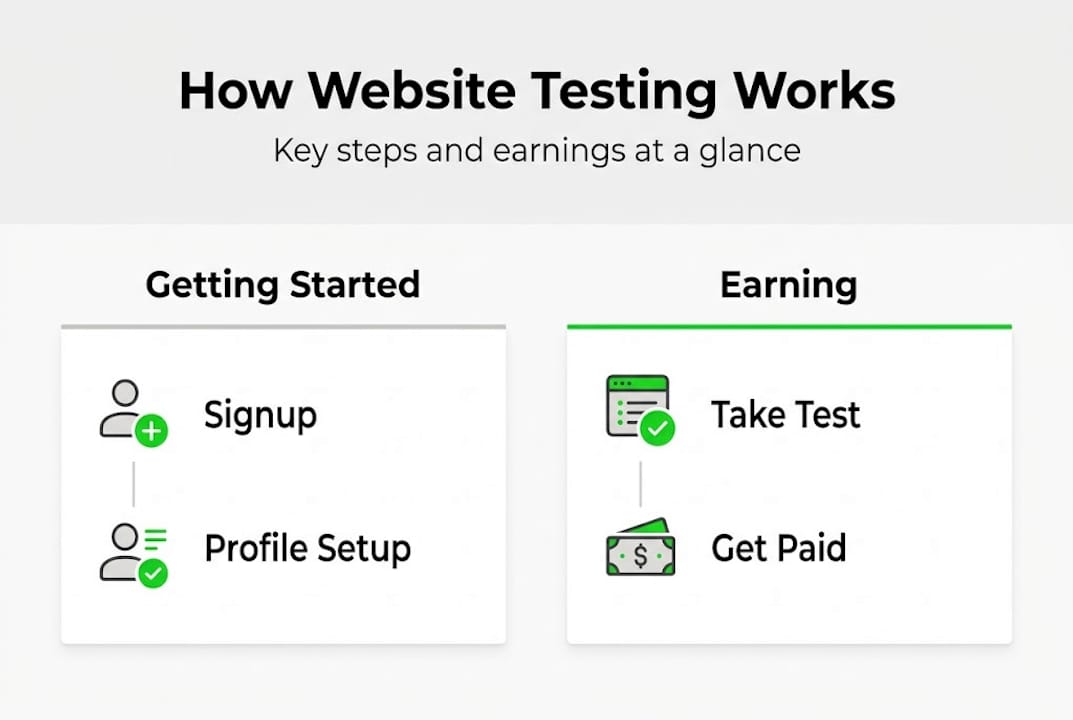
The mechanics for usability testing follow a consistent pattern: sign up, complete a sample test to prove your skills, get screened for matching studies, then record your screen and voice while completing tasks and thinking aloud, and finally submit for review.
For a side-by-side look at platform requirements, here's a quick comparison:
| Platform | Device required | Sample test needed | Payout method |
|---|---|---|---|
| UserTesting | Desktop/mobile | Yes | PayPal |
| Userlytics | Desktop/mobile | Yes | PayPal |
| Trymata | Desktop | Yes | PayPal |
| uTest | Any | No (apply to cycles) | PayPal/Payoneer |
Pro Tip: Before your first real test, practice thinking aloud while browsing any website. Narrate what you see, what confuses you, and what works well. This habit dramatically improves your sample test scores and raises your approval rate on testing site comparisons.
With your setup complete and profiles filled out, you're ready to understand exactly how the testing process unfolds.
Step-by-step: How website and app testing works
Knowing the workflow removes the anxiety of your first assignment. Here's how it typically goes from sign-up to payout.
- Sign up and complete your profile. Register on your chosen platform and fill out every demographic field. This is what triggers test invitations.
- Pass the qualification test. Most platforms require a short sample test. You'll navigate a practice website while speaking your thoughts aloud. Pass this, and you unlock real paid assignments.
- Receive test invitations. Platforms send email or in-app alerts when a study matches your profile. Speed matters since slots fill fast.
- Complete the screener. Many studies include a short pre-test survey to confirm you match the target user. Answer honestly, even if it means getting screened out.
- Record your session. Open the task instructions, start your screen and audio recording, and complete the assigned actions while narrating your experience in real time.
- Submit and wait for review. The client or platform reviews your submission, usually within 24 to 72 hours. Approved tests trigger your payment.
Bug testing is a separate workflow. For platforms like uTest, you join a community, apply to test cycles, test on real devices, and report bugs with detailed steps and screenshots. You get paid per valid bug found or per completed cycle, which rewards thoroughness over speed.
Here's what the payout structure looks like across test types:
| Test type | Typical payout | Time required |
|---|---|---|
| Standard usability test | $5 to $60 (avg $10) | 10 to 20 minutes |
| Live conversation test | $30 to $120 | 30 to 60 minutes |
| Bug report (per valid bug) | $5 to $50 | Varies |
| Monthly active tester | $50 to $500+ | Ongoing |
A real UserTesting experience shows that consistent testers who respond quickly to invitations and deliver clear verbal feedback earn significantly more over time than those who treat it casually.

Pro Tip: When recording, speak in complete sentences rather than single words. Instead of saying "confusing," say "I'm not sure where to click because the button blends into the background." Detailed commentary gets approved faster and builds your tester rating on testing and earning tips.
Troubleshooting, common pitfalls, and maximizing your earnings
Even experienced testers hit walls. Understanding why rejections happen, and how to prevent them, is what separates casual earners from consistent ones.
Why rejection rates are so high
This is the part most guides gloss over. Screen-out rates on testing platforms range from 70 to 95%, meaning the majority of test attempts never result in payment. Demographics limit who qualifies, and feedback that's unclear or too brief gets rejected outright. It's not personal, but it is predictable.
Here are the most common pitfalls and how to fix them:
- Incomplete profile: Fill out every field, including niche details like software you use or industries you work in
- Rushing through tasks: Clients want genuine reactions, not speed runs through their interface
- Quiet room neglect: Background noise is an automatic rejection trigger on most platforms
- Single platform dependency: Relying on one site means feast-or-famine income
- Ignoring tester ratings: Low ratings reduce future invitations, so treat every test like a job interview
"The testers who earn the most aren't necessarily the fastest or most tech-savvy. They're the ones who give feedback so clear and useful that clients request them again." This insight from website testing advice reflects what separates top earners from the rest.
Technical issues and quick fixes
App glitches happen. If your recording software crashes mid-test, stop and restart before submitting incomplete footage. Most platforms allow retakes within a short window. Always test your microphone and screen recorder before accepting an assignment, not during it.
Pro Tip: Join three to five platforms simultaneously to compare income platforms and keep a steady stream of invitations coming in. When one platform is slow, another usually picks up the slack.
What results to expect: benchmarks, real earnings, and success factors
Let's talk numbers. Setting realistic expectations upfront prevents frustration and helps you build a sustainable routine.
Platform earnings benchmarks
Empirical data from one tester's three-month tracking shows average monthly earnings of $133 on UserTesting, $90 on Userlytics, and $63 on Trymata. Top earners across multiple platforms can reach $300 to $500 per month, but most active testers land in the $50 to $200 range.
Here's how platforms stack up on key factors:
| Platform | Avg monthly earnings | Test frequency | Difficulty level |
|---|---|---|---|
| UserTesting | ~$133 | High | Beginner-friendly |
| Userlytics | ~$90 | Medium | Beginner-friendly |
| Trymata | ~$63 | Medium | Beginner-friendly |
| uTest | Varies | Cycle-based | Intermediate |
What actually drives higher income
Activity level matters more than any other single factor. Testers who check for invitations multiple times per day and respond within minutes consistently earn more. Feedback quality is the second biggest lever. Platforms track your ratings, and high-rated testers get priority access to better-paying studies.
Demographic fit is the wildcard. If your profile matches a platform's most-requested user type, you'll see far more invitations than someone who doesn't. This is why filling out your profile completely, including your job, income bracket, and device usage, is so important.
Some testers report reliable PayPal payments but note that inconsistent test volume can be frustrating, especially on platforms where demographics heavily filter who gets invited. uTest has a steeper learning curve but rewards testers who invest time in understanding bug reporting standards.
For earning benchmarks and reviews, tracking your own monthly data across platforms helps you identify which ones are worth your time and which to deprioritize.
Stat to know: Most active testers earn $50 to $200 per month. Top performers active on four or more platforms can push $300 to $500 monthly.
Platform diversity, consistent activity, and high-quality feedback are the three pillars of a strong testing income. Miss any one of them and your earnings plateau fast.
Real-world wisdom: What most guides miss about testing websites for money
Here's the uncomfortable truth most articles skip: website testing is a flexible side hustle, not a replacement income. Treating it like a part-time job with fixed hours leads to burnout and disappointment. The testers who stick around and actually enjoy it treat it like a skill they're sharpening, not a quota they're filling.
The multi-platform strategy is criminally underrated. Joining three to five platforms isn't just about volume. It's about learning which types of tests you're genuinely good at and which platforms value your demographic. Some sites will be feast-or-famine for months, then suddenly flood you with invitations.
Feedback quality beats sheer volume every single time. One detailed, well-narrated test submission does more for your tester rating than three rushed ones. Platforms share tester scores with clients, and a strong score is essentially your resume in this space.
Patience is the real skill. Most testers quit within the first two weeks because invitations are slow at the start. Stick with it for 60 days across multiple platforms and the picture changes significantly.
Next steps: Connect with top website testing platforms
You've covered the full picture: what you need, how the process works, what to earn, and how to avoid the pitfalls that trip up most beginners. The next move is to act on it.
PrizePeek makes it easy to start earning by testing websites, apps, and completing simple tasks, with fast cashouts via PayPal, Bitcoin, Litecoin, and gift cards. Whether you're looking for your first $50 or building toward a consistent monthly side income, sign up for PrizePeek and access curated earning opportunities right away. Real payouts, real tasks, and a platform built for people who want results without the runaround.
Frequently asked questions
How much money can I make testing websites?
Most testers earn between $50 and $200 per month, while top earners active on multiple platforms can reach $300 to $500 monthly. Your income depends on activity level, demographic fit, and feedback quality.
What platforms are best for beginners?
UserTesting and Trymata are the most beginner-friendly options, requiring no QA experience and offering straightforward task formats that new testers can handle quickly.
How do payouts work for website testing?
Most platforms pay via PayPal or Payoneer on a weekly or bi-weekly schedule once your test is approved. For bug testing on platforms like uTest, you're paid per valid bug or per completed test cycle.
Why do some tests reject my feedback or screen me out?
Screenouts happen when your demographics limit invites or your feedback is too brief and unclear. Completing your profile fully and speaking in detailed sentences during recordings reduces rejection rates significantly.
Can I test sites from outside the US?
Yes, platforms like UserTesting, Userlytics, Trymata, and uTest accept international testers, though the number of available studies may be lower depending on your region and language.